Crypto Insight: 25 Jan 2026
The cryptocurrency market is navigating a complex landscape as January 2026 draws to a close. While a recent recovery has shown signs of faltering, leading to a prevailing sense of neutrality, key developments in regulation and technology continue to shape the future of digital assets.
Regulatory Shifts and Global Alignment
A significant trend in 2026 is the global alignment of crypto regulations, with a notable shift from seeking regulatory clarity to active enforcement. PricewaterhouseCoopers (PwC) identifies six key trends, including increased scrutiny of stablecoins, with regulators imposing binding rules on reserves, redemption rights, and disclosures. Central banks are also exploring interoperability between systemic stablecoins and payment systems.
The tokenization of real-world assets (RWAs) is another prominent theme, with tokenized bank deposits, cash equivalents, and wholesale central bank digital currencies moving beyond pilot phases. This trend was a consistent topic at the World Economic Forum in Davos, highlighting the growing integration of blockchain with traditional financial markets.
In the United States, regulatory bodies are actively working to harmonize their approaches. The CFTC and SEC have announced joint events to discuss harmonization and the U.S.’s role in the crypto era. Furthermore, the Senate Agriculture Committee has released new legislative text, the “Digital Commodity Intermediaries Act,” aimed at giving the CFTC authority over digital commodities. Notably, this draft includes provisions to protect non-custodial software developers. Meanwhile, the U.S. regulatory landscape saw a dramatic shift in 2025, moving from enforcement-heavy skepticism to a focus on market participant flexibility. This includes clarifying that payment stablecoins are not securities and that staking activities do not necessarily involve securities.
Europe is also progressing with its regulatory framework. The Markets in Crypto-Assets Regulation (MiCA) has entered into force, establishing uniform EU rules for crypto-assets not covered by existing financial legislation. While implementation is ongoing, discussions are underway regarding multi-issuance stablecoins under MiCA, influenced by reports on systemic risks.
Market Performance and Altcoin Activity
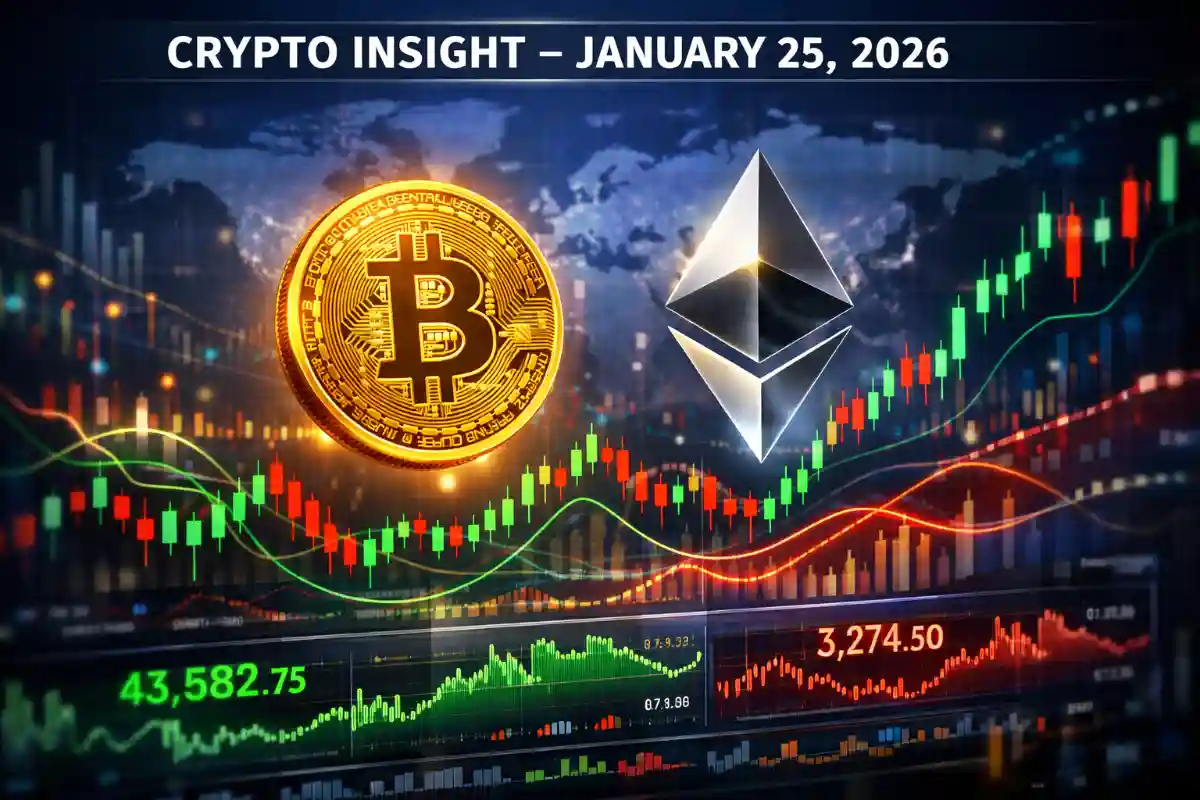
As of January 25, 2026, the global cryptocurrency market cap stands at approximately $2.98 trillion, showing a slight decrease over the past day. Bitcoin (BTC) has been trading in the range of $88,136 to $89,676, currently priced around $88,455. The broader market has seen weakness, with most major cryptocurrencies trading lower. Solana (SOL) has experienced a notable decline of -11.79% over the last seven sessions, while Bitcoin has shown more relative stability with a -6.04% decrease.
Despite the general market softness, some altcoins are showing potential for growth. Monero (XMR) is among those contenders for a fresh all-time high, stabilizing above a key support level and positioning for a potential rebound. Rain (RAIN) is also trading close to its all-time high, with its price action dependent on maintaining a crucial support level. Additionally, projects focused on privacy and digital identity, such as Zcash (ZEC) and Humanity Protocol (H), are being watched for potential gains in early 2026.
Emerging Technologies and DeFi Trends
The blockchain and crypto space is also being shaped by technological advancements and evolving decentralized finance (DeFi) trends. Modular blockchain architectures, zero-knowledge proofs (ZKPs) for enhanced privacy and scalability, and the tokenization of real-world assets (RWAs) are key developments. Blockchain is also increasingly being explored as infrastructure for Artificial Intelligence (AI), facilitating secure data sharing and model transparency.
In DeFi, the sector is grappling with security challenges following recent breaches, underscoring the need for enhanced protection measures. Despite this, trends like unified stablecoin layers, decentralized exchanges (DEXs) rivaling centralized exchanges (CEXs), and a continued push for privacy are anticipated to drive adoption. The ratio of DEX to CEX perpetual futures volume has tripled, indicating a growing efficiency and user experience on decentralized platforms. Aave continues to strengthen its position as a dominant lending venue, supported by its multichain strategy and deep liquidity.
The integration of blockchain technology into traditional finance is expected to accelerate, with institutions exploring tokenization and other digital asset services. As the market matures, a clearer distinction is emerging between Bitcoin’s role as a store of value and other growth-oriented blockchain assets.
For those looking to engage with the evolving crypto landscape, understanding these regulatory shifts, market dynamics, and technological innovations is crucial. The burgeoning interest in digital assets is reflected in the growing range of applications, from the potential rise of crypto casinos in Switzerland to broader institutional adoption. For real-time price updates and further insights, resources like live Price of Crypto remain essential tools for navigating the dynamic world of digital assets.