Crypto Users Lose Over $62 Million to Address Poisoning Scams in 2026
In the fast-evolving world of cryptocurrency, where fortunes can be made or lost in an instant, a new wave of sophisticated scams is putting investors at greater risk than ever. Address poisoning attacks have emerged as a particularly insidious threat, draining millions from unsuspecting users. As crypto attacks surge in 2026, understanding these scams and how to avoid them has become essential for anyone navigating the digital asset space.
What Is Address Poisoning and How Does It Work?
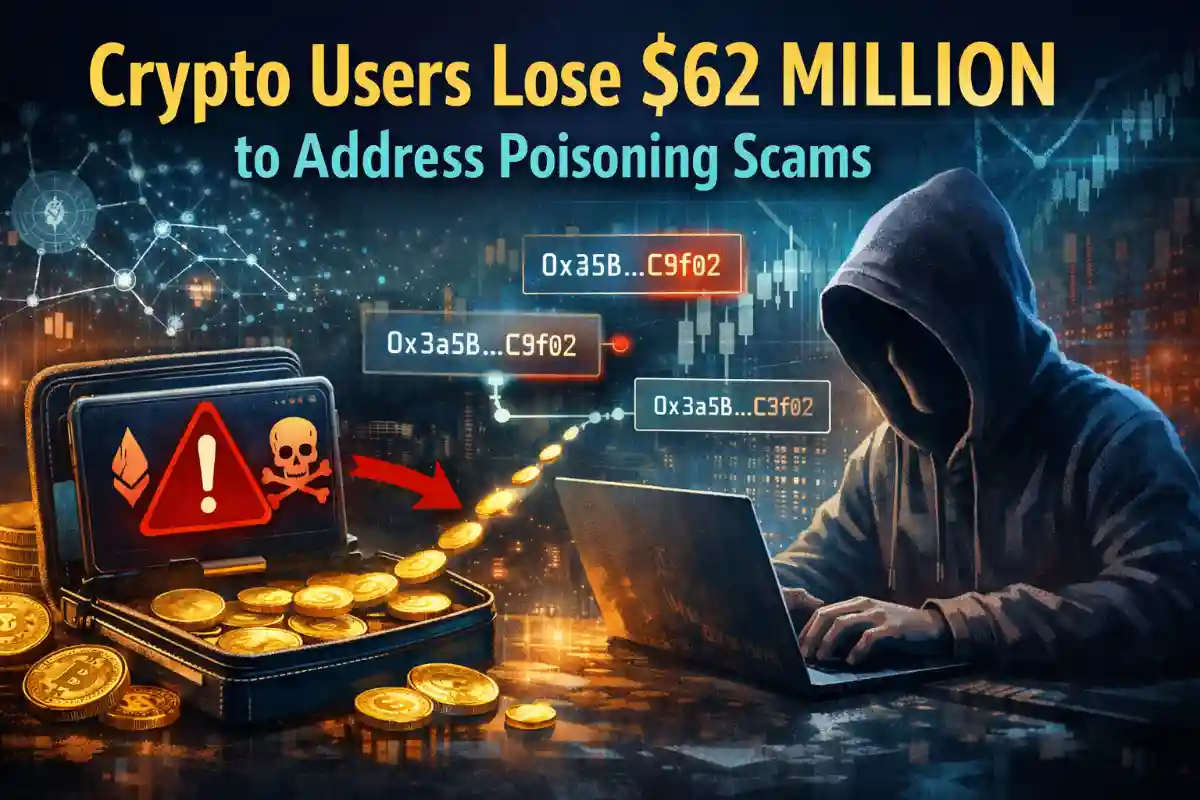
Address poisoning is a deceptive tactic where scammers create wallet addresses that closely mimic those of legitimate users or transactions. By sending tiny, almost negligible amounts of cryptocurrency—often referred to as “dust”—from these fake addresses, attackers poison the victim’s transaction history. When users go to copy an address for a transfer, they might accidentally select the fraudulent one, sending their funds straight into the hands of criminals.
This method exploits a common habit among crypto holders: relying on recent transaction logs for quick copies. With blockchain networks becoming more efficient and transaction fees dropping—thanks to updates like Ethereum’s Fusaka upgrade—scammers can launch these attacks on a massive scale without incurring high costs. Over the past two years, researchers have tracked over 270 million such attempts, targeting around 17 million wallets and resulting in losses exceeding $83.8 million.
Recent High-Profile Cases Highlight the Growing Threat
The start of 2026 has already seen devastating examples of address poisoning in action. In January alone, one victim lost approximately $12.25 million after mistakenly transferring funds to a poisoned address pulled from their history. This incident followed a even larger loss in December 2025, where another user forfeited nearly $50 million in a similar mishap. Together, these two cases account for over $62 million vanished into scammers’ pockets.
But address poisoning isn’t the only scam on the rise. Signature phishing attacks, where fraudsters trick users into signing malicious transactions, surged by 207% in January 2026 compared to the previous month. These exploits affected 4,741 victims, leading to $6.27 million in stolen assets. Notable instances included thefts of $3.02 million in tokens like SLVon and XAUt, and $1.08 million from aEthLBTC holdings.
In one coordinated effort targeting multisig wallets, attackers generated thousands of lookalike addresses to deceive users. While not a direct exploit of wallet protocols, this social engineering campaign underscores how scammers are adapting to prey on human error rather than technical vulnerabilities.
The Broader Impact on the Crypto Ecosystem
The surge in these attacks comes amid a broader escalation in crypto-related fraud. Estimates suggest that scams and illicit activities siphoned off around $17 billion from the industry in 2025, marking a sharp increase from previous years. Impersonation tactics, in particular, grew by 1,400% year-over-year, fueled by advancements in AI and lower barriers to entry for cybercriminals.
Stablecoins like DAI have become a favored tool for laundering stolen funds, as their governance structures often resist cooperation with authorities on freezing suspicious addresses. This has made recovery efforts even more challenging for victims. With dust transactions now comprising about 11% of daily activity on networks like Ethereum, the environment is ripe for exploitation, turning routine user behaviors into high-stakes risks.
Why Are These Scams Becoming More Prevalent?
Several factors are contributing to the rise of address poisoning and related scams. Reduced transaction costs have enabled scammers to automate attacks at an unprecedented scale, sending out millions of dust transfers with minimal expense. Additionally, the growing adoption of cryptocurrencies means more novice users are entering the space, often without fully understanding the security implications of their actions.
Blockchain analytics reveal that scammers are quick to launder funds—sometimes within minutes—converting them into other assets and routing them through mixers like Tornado Cash. This speed leaves little window for intervention, emphasizing the need for proactive prevention over reactive measures.
How to Protect Yourself from Address Poisoning Scams
Staying safe in the crypto world requires vigilance and best practices. Always generate fresh wallet addresses for each transaction rather than copying from history. Use hardware wallets for added security, and verify addresses manually—checking the first and last few characters isn’t enough; compare the entire string.
Enable two-factor authentication on exchanges and wallets, and consider using security tools that flag suspicious transactions. Educate yourself on common scam tactics, and never rush high-value transfers without double-checking details. For multisig users, be wary of any unsolicited small transfers, as they could be the setup for a larger attack.
As the crypto landscape continues to mature, so too do the threats within it. By staying informed and cautious, investors can mitigate these risks and focus on the innovative potential of digital assets. In a market where attacks are surging, knowledge truly is the best defense.